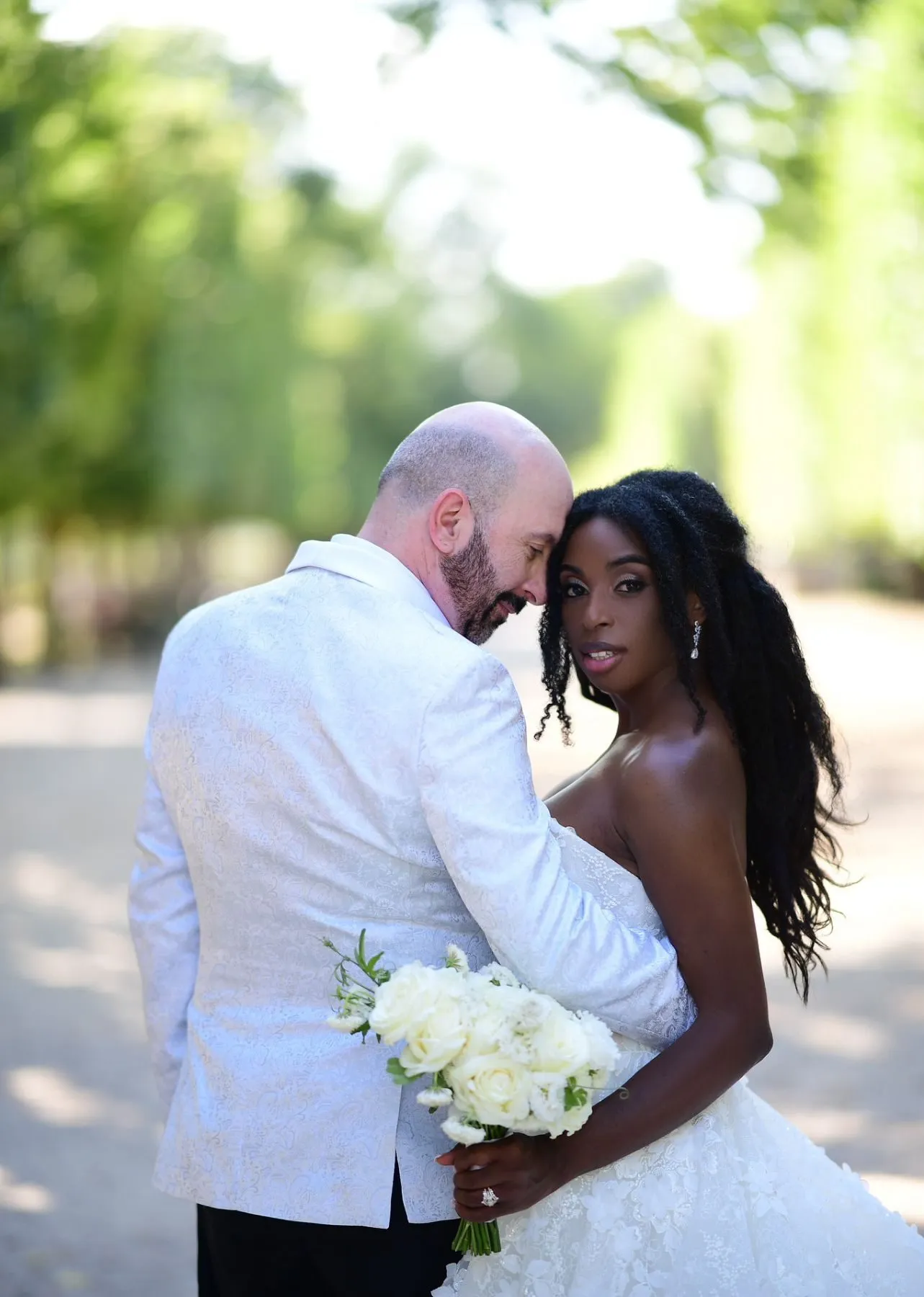
A bilingual wedding ceremony in Paris gives both families a place in your celebration. If your relationship moves between English and Spanish, your ceremony can reflect that naturally, without translating every sentence twice or asking either side of the family to follow words they do not understand.
As a wedding officiant in Paris, I create symbolic ceremonies in English, Spanish, or both. The starting point is your story: the languages you share, the people joining you, and the words that feel most comfortable when you make your promises.
Start with the people, then choose the language balance
Before deciding on a fifty-fifty split, think about who needs each language. Perhaps you both speak English, but one set of parents understands only Spanish. Perhaps your guests are bilingual while you each prefer a different language for your vows.
Make a simple list together:
- Which language does each of you use most comfortably?
- Which guests would struggle to follow English or Spanish?
- Are there relatives giving readings who prefer their first language?
- Which moments should everyone understand as they happen?
The answers help shape a ceremony around real people. An equal word count matters less than making sure each family can follow the meaning and feel involved.
Does every sentence need to be translated?
No. Repeating the entire script in two languages is one option, but it can interrupt the flow and make the ceremony longer than you intended. A different approach is to move between languages at natural points, with short summaries where they help.
For example, the welcome might address everyone in English and Spanish. Your story could be told in short sections, with its central moments shared in both languages. A reading might stay in its original language, introduced with a brief explanation for the other guests.
Discuss which words need a full translation and which need only context. The promises and exchange of rings deserve particular attention: these are moments when guests often want to understand the words, as well as see the emotion.
A sample English–Spanish ceremony structure
This outline is a starting point for a symbolic ceremony, rather than a fixed script:
- Welcome in both languages. Greet each family and explain how the languages will be woven through the ceremony.
- Your story. Share the moments that brought you together, with concise summaries so neither family loses the thread.
- A reading or family contribution. Let the reader use the language that feels natural, with a translation in the programme if useful.
- Personal vows. Speak in your chosen language, with an agreed way for guests to follow.
- Exchange of rings. Keep instructions clear and share the meaning of the promises in both languages.
- Closing words. Bring everyone together again before the celebration continues.
If you include a ritual, explain its meaning in both languages before it begins. You can explore ideas for personalising a symbolic ceremony and choose something that reflects your own values, rather than adding a tradition simply because it is expected.
Can you say your wedding vows in different languages?
Yes. In a symbolic ceremony, you can each choose the language in which your promises feel most honest. One partner might speak English and the other Spanish. You might also choose to finish with a short sentence in your partner’s first language.
If one of you will not understand the other’s vows, decide in advance how you want to experience that moment. You could share a translation privately beforehand, include one in a printed programme, or ask your officiant to give a short translation during the ceremony.
Read your vows aloud while preparing them. A sentence that looks beautiful on paper may feel difficult to say when you are emotional. My guide to writing your wedding vows offers a starting point for finding words that sound like you.
Help your guests follow without filling the day with translation
A simple printed programme can hold the ceremony outline, a translated reading, or the meaning of a family ritual. Use clear type and keep it brief enough to follow comfortably. If you prefer to keep personal vows private until the ceremony, leave them out of the programme and agree on another approach.
Share readings and translations with your officiant ahead of time. Names, family references and humour need care: a joke that feels affectionate in one language may need different wording in the other.
For an outdoor Paris ceremony, discuss sound and positioning with your venue or planner too. Guests need to hear clearly before any language choice can help them feel included.
Allow room for both languages in your timeline
A bilingual ceremony does not have one standard duration. Its length depends on your vows, readings, rituals and how much translation you choose. Ask your officiant to read the planned script aloud and allow time for pauses, emotion and the movement between speakers.
Agree on the structure before fixing the rest of the day around it. For more planning guidance, read about wedding ceremony length in Paris.
Is a bilingual symbolic ceremony legally binding in France?
No. The languages you choose do not change the legal status of a symbolic ceremony. It celebrates your commitment but does not create a legal marriage. Keep your legal arrangements separate and confirm any civil marriage requirements with the relevant authorities. Read more about legal and symbolic weddings in France.
Plan your bilingual wedding ceremony in Paris
Your ceremony can honour two languages while still feeling like one shared moment. Thoughtful choices about the welcome, vows and family contributions help everyone understand why they are there: to celebrate the two of you.
Explore my wedding ceremonies in Paris, or tell me about your plans. Share your date, location and the languages you and your guests speak, and we can begin shaping a ceremony around your story.